

Look back
Why we cannot ignore history

It’s easy to dismiss history.
We have so much on our plates in the present, why spend time exploring the past? Especially periods and events that seemingly have no bearing on who we are today.
I held these thoughts for a long time. The technological advances of the 21st century have been so rapid and have become an integral part of our everyday lives that I believed there were very few parallels to draw from those born in the 19th century, let alone 2,000 years ago.
And then I opened a book like Meditations and realized, despite the vastly different external elements, humans have dealt with the same internal dialogues for as long as history has been documented.
Anxiety. Self-doubt. Struggling to find a purpose. A lack of motivation. A fear of failure. The weight of responsibility.
These are the foundations of Meditations, thoughts that Marcus Aurelius wrote to himself during his reign as Emperor of Rome in the second century.
Marcus had no intention of these words being published, let alone the impact they would have on leaders nearly 2,000 years later. His writings served as a reflection tool for himself as he navigated a life as the most powerful person in the world, a life he did not desire.
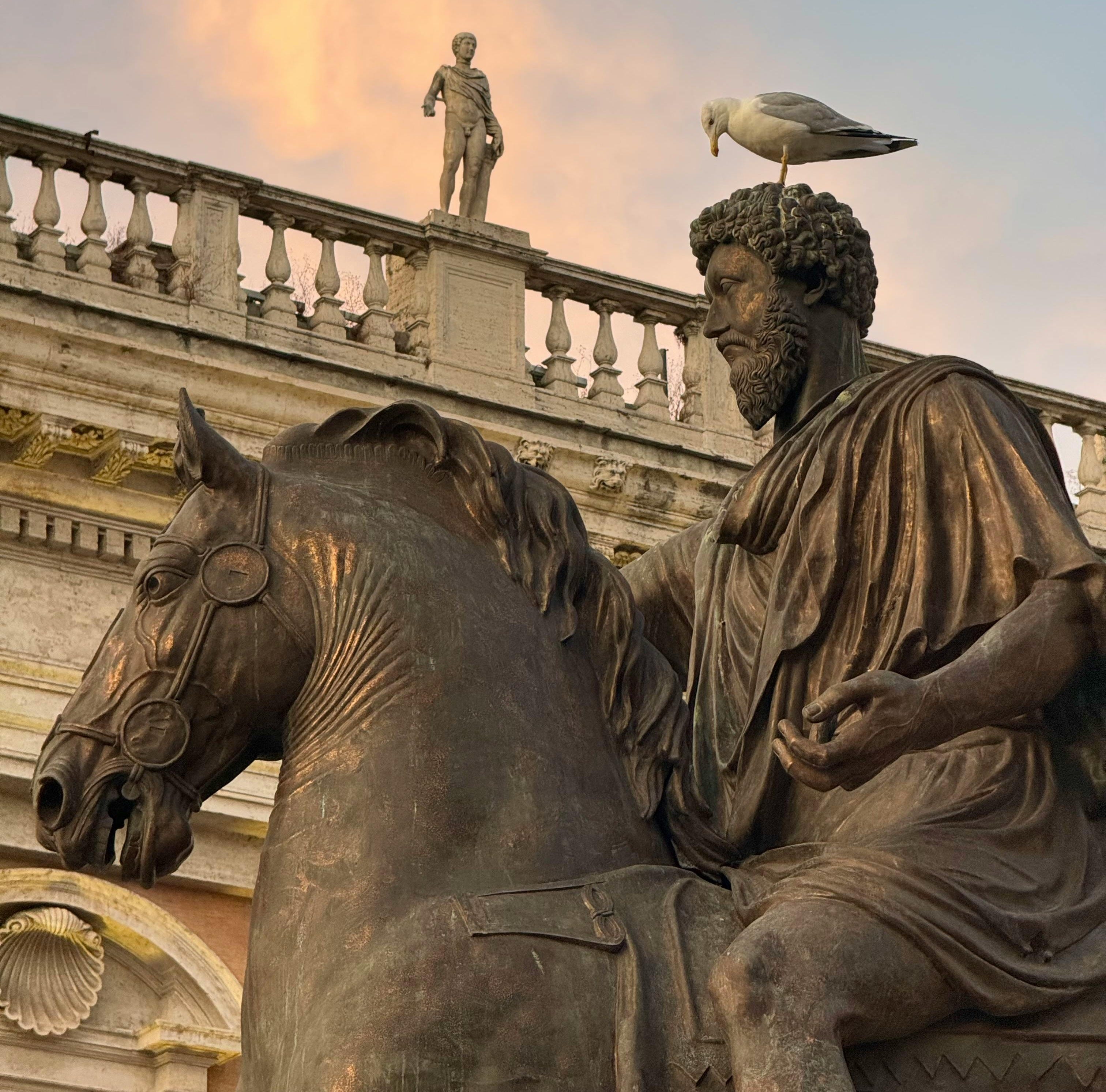
On the surface, reading words written by anyone from nearly 2,000 years ago is incredible.
Add in that these words were written by the most powerful man on the planet.
The only “philosopher king” of Rome who wanted no part of the throne.
And these writings were never meant to be published.
Considering these factors alone, it is no surprise that Meditations is so revered.
However, I believe the real reason it has resonated with such a broad audience throughout history is its relatability (which, on the surface, given who Marcus was, is absurdly transformative and a phenomenal lesson about the core tenets of human nature).
When you realize how many commonalities we share with those from the past, it becomes apparent how important it is to consume history.
What led me to open a biography of President Ulysses S. Grant last summer was twofold: checking another box off my goal of reading a biography of every United States President, and curiosity regarding President Grant’s reported struggles with alcohol.

By the time I finished the 667-page book, I had gained infinitely more than just knowledge of the life and battle tactics of a Civil War hero and the 18th President of the United States.
Grant epitomized what it means to be relentless, fearless, unwavering, unbothered, and loyal.
His four-year ascent from a small-town tanner in Illinois to General-in-Chief of the Union Armies was unheard of and instrumental in ending the Civil War.
President Grant is a prime example that we are defined by our actions, not by how we look, what we say, or what others think.
“We all form our preconceived ideas of men of whom we have heard a great deal, and I had certain definite notions as to the appearance and character of General Grant, but I was never so completely surprised in all my life as when I met him and found him a different person, so entirely different from my idea of him,” wrote Alexander Stephens, Vice President of the Confederacy.
“His spare figure, simple manners, lack of all ostentation, extreme politeness, and charm of conversation were a revelation to me, for I had pictured him as a man of a directly opposite type of character, and expected to find in him only the bluntness of a soldier. Notwithstanding the fact that he talks so well, it is plain he has more brains than tongue. He is one of the most remarkable men I have ever met. He does not seem to be aware of his powers.”
“Unconditional Surrender” Grant was incredibly soft-spoken, and like Marcus Aurelius, wanted no part of being in the limelight. Yet he was able to gain the respect of hundreds of thousands of Union soldiers (and Confederates, for that matter) by leading from the front, sharing in the hardships of infantrymen, and demonstrating an unwavering desire to achieve the task at hand by only moving forward.
All that to say, take time to learn from those who came before you.
The more history you consume, the more parallels you can draw from those who shaped it, allowing yourself to create a web of habits, patterns, and shortcomings that help inform how you think and act.
Remove the blinders of what’s ahead, and you’ll open up a vast library of truths.
“Human nature will not change. In any future great national trial, compared with the men of this, we shall have as weak and as strong, as silly and as wise, as bad and as good. Let us therefore study the incidents in this as philosophy to learn wisdom from and none of them as wrongs to be avenged.” — Abraham Lincoln