

Emotion
Why the domestication of your emotions is the way

Humans are emotional beings.
For as much as we would like to credit our rise as a species to logic and reason, emotion is inarguably the number one catalyst regarding our longevity.
Emotions drive our wants and needs, leading us both consciously and unconsciously into actions that shape our lives. These emotional responses have been coded and nurtured in our physiology for hundreds of thousands of years.
Instead of fighting evolution (a battle you will surely lose), why not look to understand your emotions so you can better observe and react to the massive shifts in thought that accompany life as a human?
As Nassim Taleb put it, real strength lies in the domestication of one’s emotions, not in pretending they don’t exist.
We look to our leaders for strength, and to our heroes for resilience; The knight in shining armor who never retreats.
Do you think a young Ulysses S. Grant wanted to carry a message across a stretch of open ground swept by enemy fire during the Mexican–American War?
Of course not! He was scared, as any human would be.
But he acted anyway.
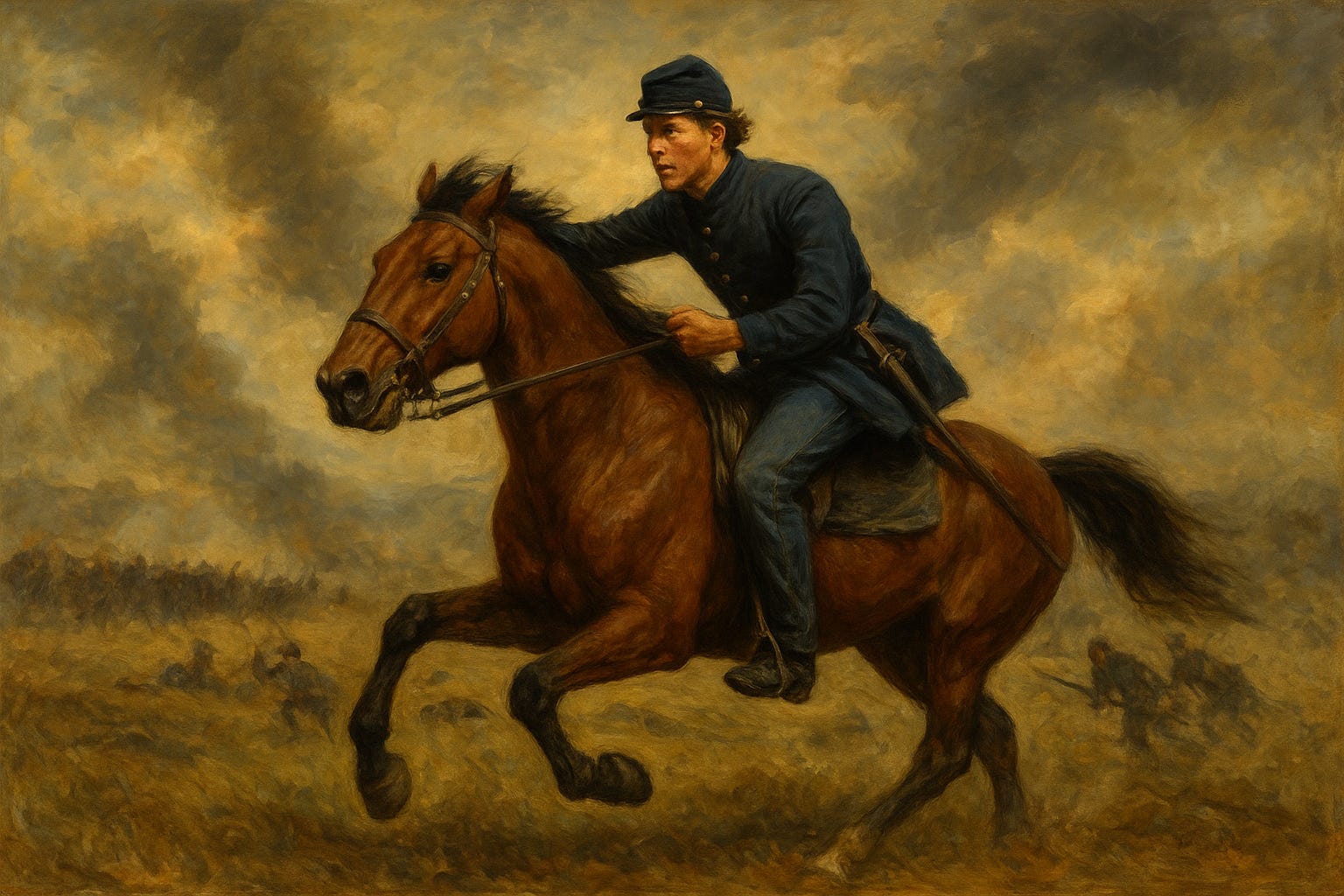
During his time as General-in-Chief of the Union Army, Grant made sure to visit the makeshift Union hospitals across the South.
Most generals avoided these hospitals and the despair that accompanied a visit, but Grant confronted the suffering directly. Witnesses remembered him shaken and quietly wiping away tears as he saw rows of mutilated soldiers.
The 1864 Battle of the Wilderness was the first in which Grant-led Union forces squared off against General Robert E. Lee’s Confederate Army of Northern Virginia. Over the previous three years, Lee’s army ran rampant throughout Virginia, Maryland, and Pennsylvania, defeating the Union at every turn.
Up until this point, Lee carried an almost mythic aura of invincibility.
In the middle of what was described as one of the most “chaotic and terrifying” battles of the war, officers recalled Grant with a cigar in his mouth, riding through cannon fire and chaos as if a mutiny wasn’t happening around him.
This composure was not apathy or indifference, but rather a form of personal discipline, knowing if he unraveled, so would his army.
In his memoirs, Grant admitted he often felt anxious and restless before battle (as the human he was!). “The terrible responsibility,” of leading men to slaughter, as he described it, weighed on him heavily.
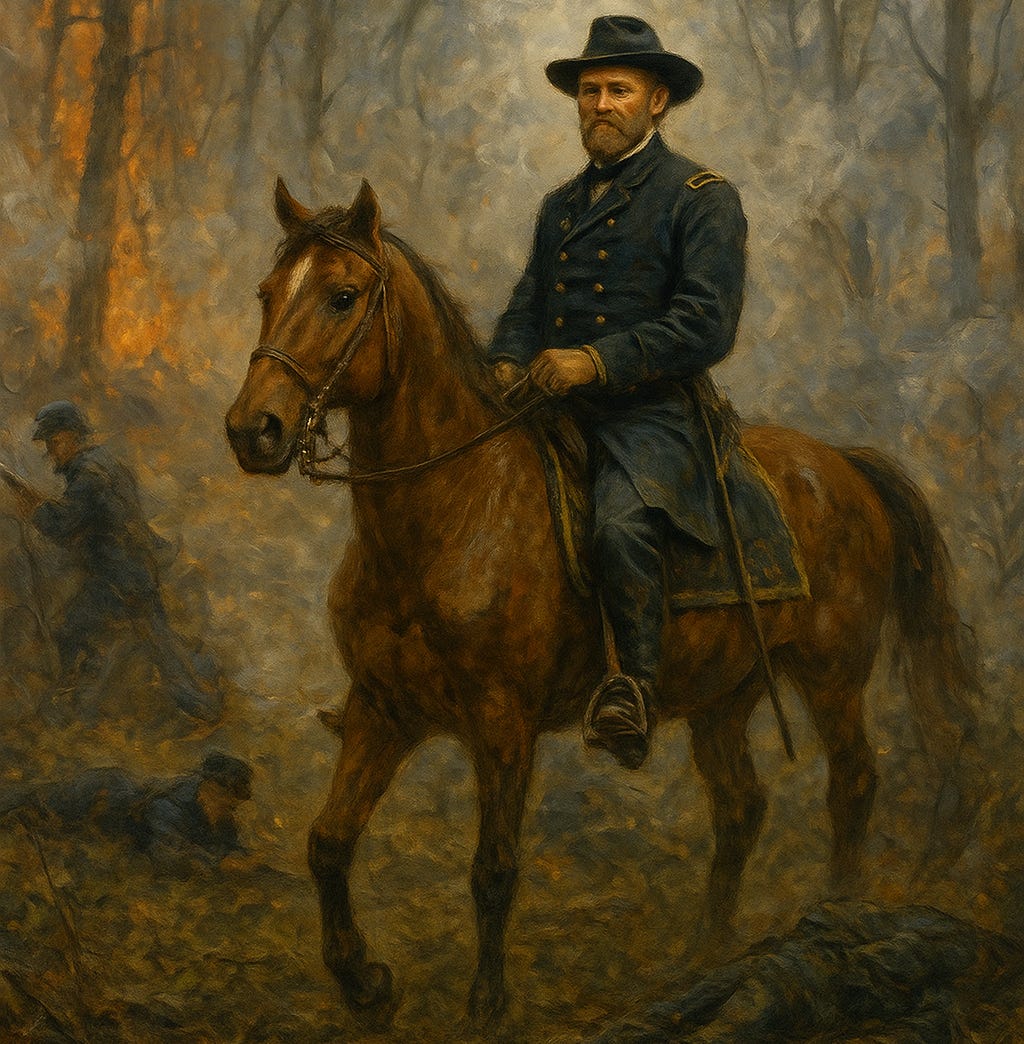
It was not Grant’s absence of emotions that defined him, but his control of them.
As the weight of an army and a nation fell on his shoulders, Grant was able to masterfully domesticate his emotions for the good of the country.
Sometimes he shed tears, other times he stood over a chaotic battlefield with stoic attention. But he was always in control, expressing what was needed from him as General-in-Chief.
Too often, we let our emotions dictate our actions. We identify so completely with an emotion that we lose awareness altogether.
A natural response to this is to attempt to quash emotions (or those we see as negative) completely.
The way is somewhere in the middle.
To deny emotion is to deny our humanity; However, to be ruled by it is to forfeit free will.
The leaders who endure, like Grant, remind us that mastery of our emotions is not rooted in disregard. It is allowing everything in without being consumed.
Deep down, you know the way. Don’t let emotion chart you off course.
“The fact is I think I am a verb instead of a personal pronoun. A verb is anything that signifies to be; to do; to suffer. I signify all three.” — Ulysses S. Grant
Thanks for this one, Shane! It is a nuanced balance that I am always working on!